Player development3 min read
The football player profile that follows a player between academies
By Nahel Jarmakani · Published · Updated
A football player profile is one place that holds everything a player has done: their stats, ratings and clips from every match, season after season. At Fairplai we call it the Player Record, and it’s the base for a football player development plan. It builds up on its own from the cameras, and in the long run it can go with a player when they move academy, if a parent agrees.
A player spends a season learning a new position. They take the feedback and get braver on the ball. Then they move academy, and the new coach starts from zero.
What is a football player profile?
A football player profile is a player’s history in one place, so anyone coaching them can see where they’ve come from. Today, for most young players, that history is a phone call with the old coach, a few clips or a trial. A good trial can make a strong impression and a bad afternoon can undo a season, and either way most of what that player worked on doesn’t travel with them. The Player Record is our answer to that: a profile built from what actually happened on the pitch, not from one afternoon or one opinion. Think of it as a scouting report that writes itself.
What does a Player Record hold?
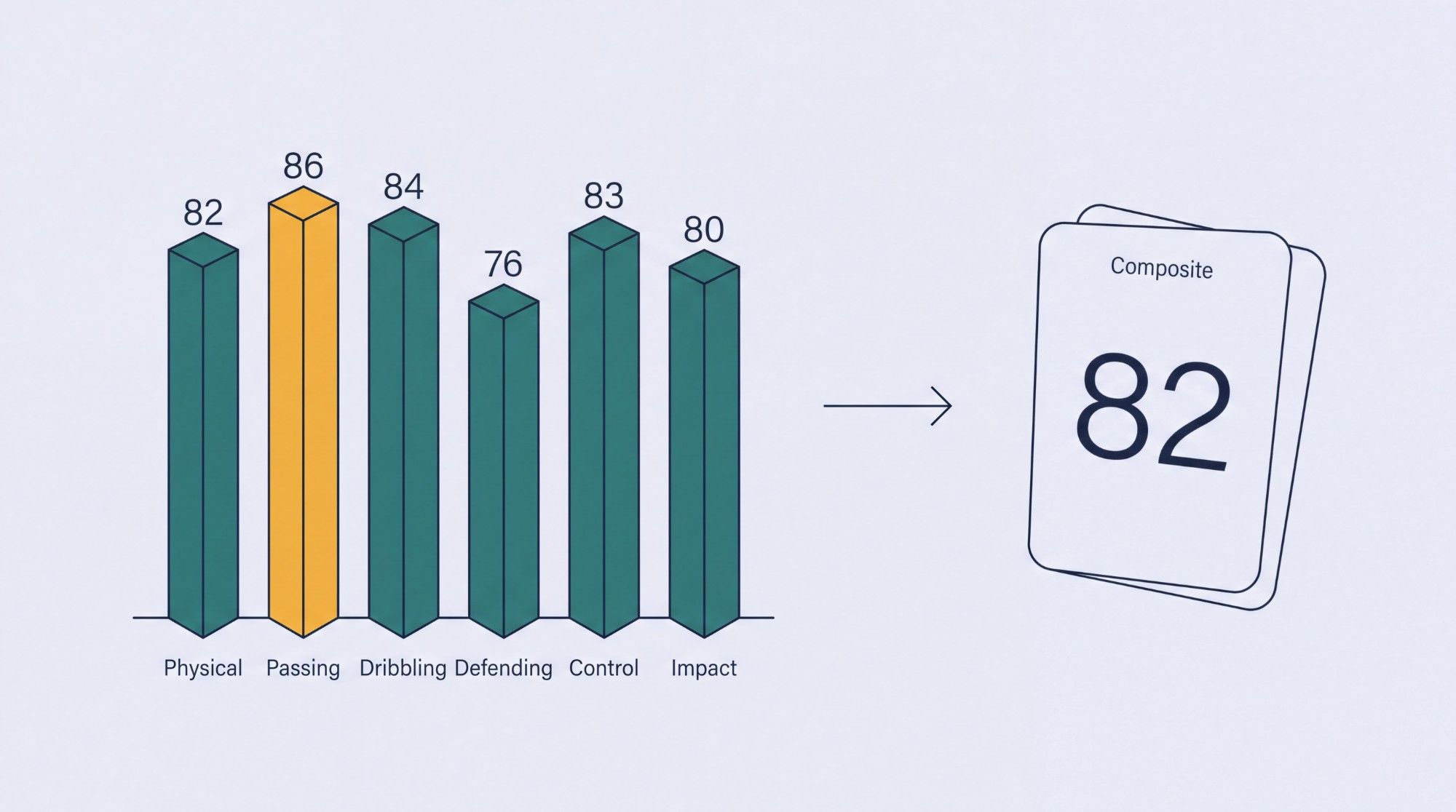
It holds every session the cameras capture, with the player’s stats, ratings and clips. That adds up fast. The midfielder in our ratings post made 41 passes in one match, so over a season of around 30 matches, counting training matches, that’s more than 1,200 passing clips before a single tackle or shot. As a coach, you get to know your players session by session, and writing it all down is another job on top of coaching, so it usually ends up scattered across a notebook, a folder of clips and a group chat. The Player Record keeps it in one place, next to what you noticed yourself.
How does it help a player’s development plan?
It shows whether the plan is working. Take a player who’s moved from the wing into central midfield. Their distance covered drops because their job has changed, and looking back over those sessions explains why. A coach can set a focus in the player’s development plan, say forward passing, and then watch the numbers and clips over the following weeks. The useful conversation becomes how the player is adapting and what to work on next, not whether one number went up. Parents can follow the same plan and see what their child is working towards.
How does it help at a trial or a new academy?
It gives the next coach a starting point. A new coach still needs time with a player, and earlier sessions show how they’ve been involved in games and which positions they’ve played. At a trial, one session shows how someone played on the day, while a season of sessions gives whoever is assessing them more to go on, alongside their own eye. For the player, it means the work they put in is part of the conversation, even when they can’t explain it themselves. Our cameras are at academies and facilities across the UAE, and players don’t wear anything.
Who controls a player’s record?
The record belongs to the player, and a parent decides what happens to it. A parent gives consent when the player registers with the academy, in the app or on a signed form, and can withdraw it at any time. If a parent says no, that player gets no stats, clips or record. Only the team’s coaches, the player and their parents can see the record, apart from our analysts who check it, and the footage behind it is processed and stored in the UAE. When a player moves academy, the record goes with them only if a parent agrees. How each rating is worked out is in How football player ratings are calculated.
If a player joined your academy tomorrow, what would you most want to know about their last season?